MySoloPool's First LTC+DOGE Solo Block Is On-Chain
On 13 August 2026 our Scrypt solo pool solved Litecoin 3,159,431 and Dogecoin 6,330,706 in the same second. Here's the coinbase split, the explorer links, and where to point an L7 or L9.
Latest news and updates about Bitcoin mining
Looking for text-first operational guides? Open mining SEO guides.

On 13 August 2026 our Scrypt solo pool solved Litecoin 3,159,431 and Dogecoin 6,330,706 in the same second. Here's the coinbase split, the explorer links, and where to point an L7 or L9.

MySoloPool runs solo lottery stratum for Bitcoin, Bitcoin Cash, merged Litecoin+Dogecoin, and Zcash. One philosophy: wallet-as-username, fee on block find, live dashboards—pick your algorithm.

Point Equihash miners at zec.mysolopool.com with your ZEC address as worker. Vardiff on :3330, NiceHash rentals on :3331, 3% fee on block find, live stats at zcash.mysolopool.com.

One Scrypt stratum URL mines Litecoin and Dogecoin together. Use your LTC address as worker—DOGE pays to the matching address automatically. 20% LTC fee on block find, 0% on DOGE.

Point Antminer or other SHA-256 BCH rigs at MySoloPool with your payout address as worker. Stratum URLs, vardiff, 3% fee on block find, and live stats on bitcoincash.mysolopool.com.

CKPool is the anonymous default for Bitcoin solo mining. MySoloPool adds live dashboards, luck math, and worker-level stats at 3% on block find. Here is an honest side-by-side for 2026.

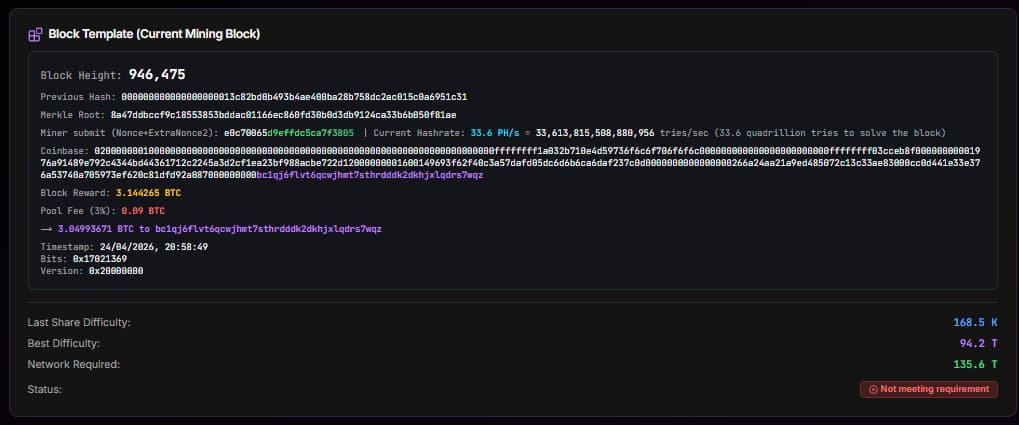
The Block Template card on MySoloPool is the most honest view of Bitcoin mining I have ever seen. It shows you the exact block your miner is trying to crack, the work being generated right now, and how fast your hashrate is actually trying.

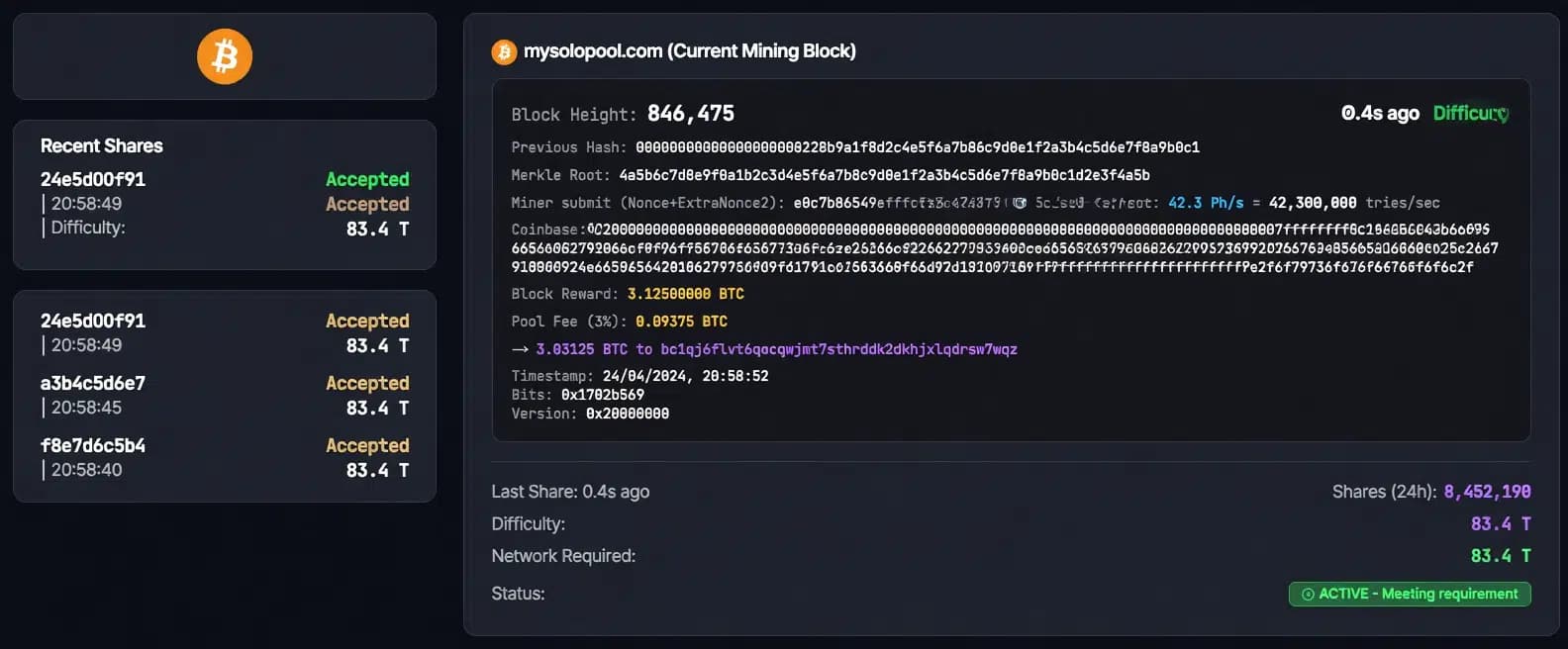
The MySoloPool dashboard is basically a window into how your miner talks to the pool. Watching it live for a while is honestly one of the fastest ways to understand what Bitcoin mining really is under the hood.

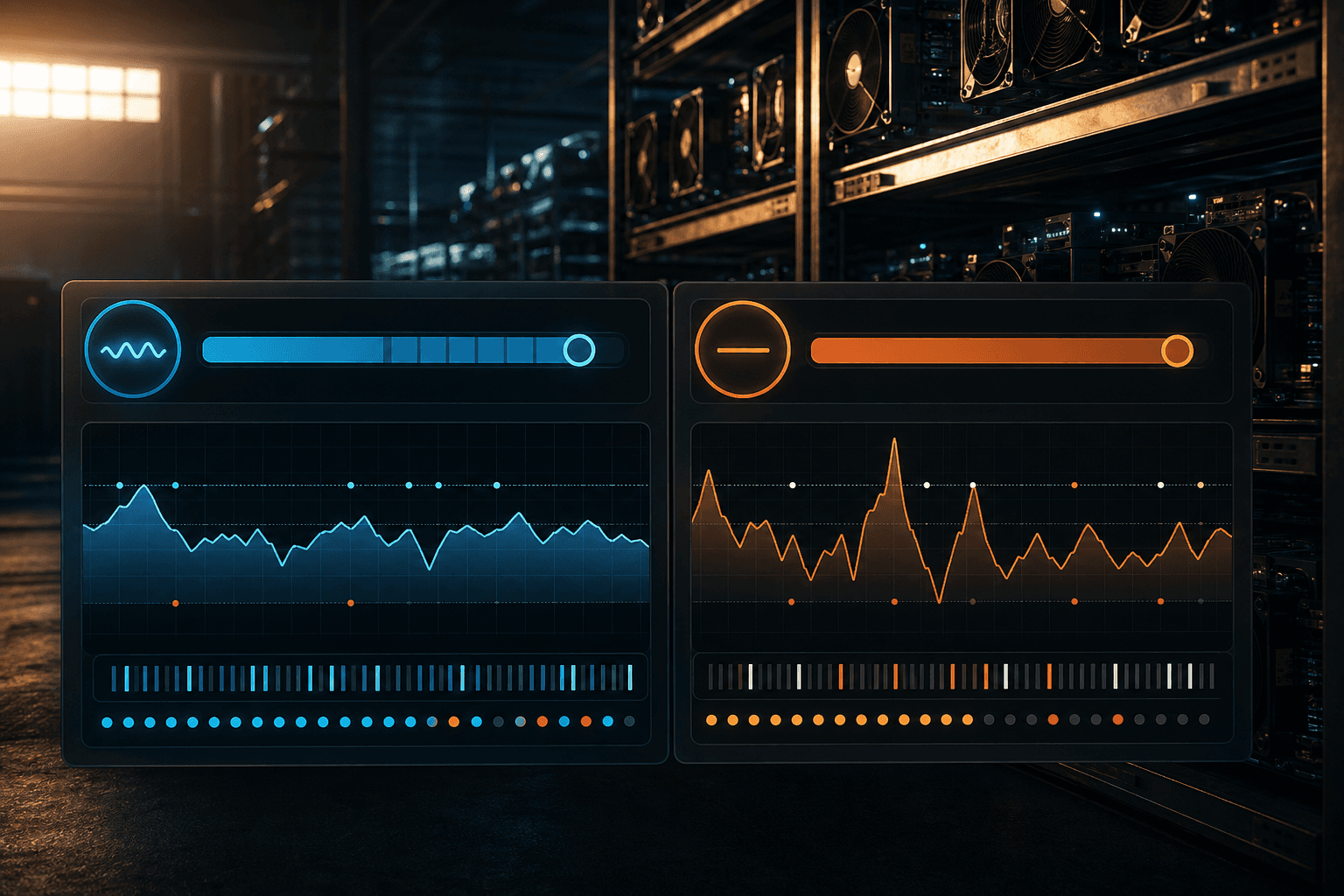
How we track down stale and reject spikes on solo mining rigs before they quietly eat into effective hashrate, plus the latency workflow we actually run to fix it.

How to read a solo mining odds calculator without fooling yourself, and how to set a campaign horizon before block luck does it for you.

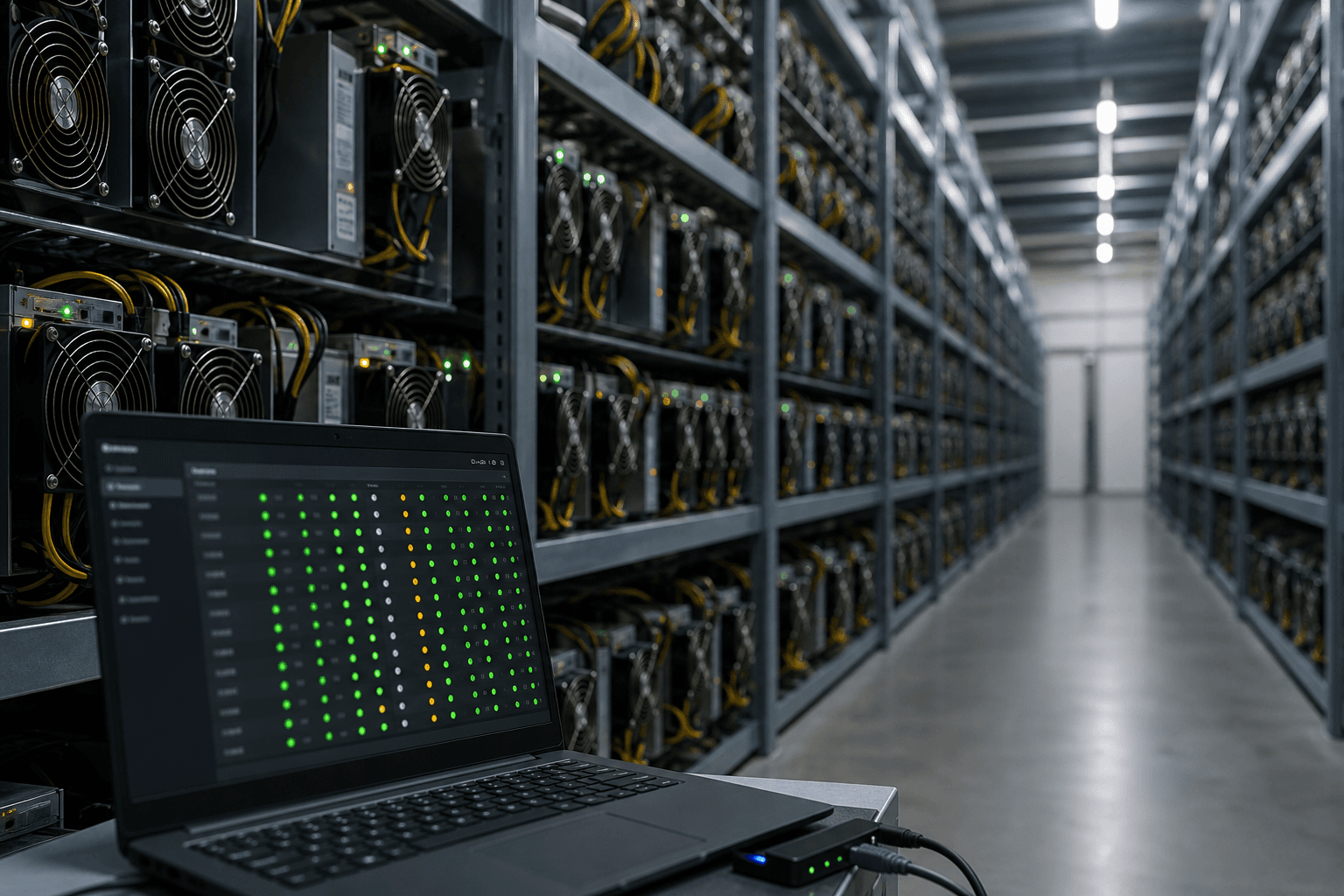
A recovery playbook for multi-worker solo mining fleets: naming conventions, baseline alert thresholds, and the failover steps we actually run when a rig goes dark.

How we decide between VarDiff and fixed difficulty for a given worker fleet — based on share stability, reconnect behavior, and how much manual tuning you're willing to do.